Hemp Products

Hemp is an important cultivated plant grown industrially for fiber, seed and similar purposes. Hemp is also produced as an energy plant (biogas, biofuel) in many countries. Experts report that the number of varieties of industrial hemp, which has very little cannabis properties as a result cannot be benefited by those who want to produce it for malicious purposes, is close to a hundred, and that these cannabis-free varieties are produced by many countries in the world. It is known that the hemp, which is non-cannabis in our country, is produced in certain regions and under certain conditions, subject to government permission. However, there is a gap in this area. It is at the stage of necessity to fill this gap under the leadership of the state, with the cooperation of the university and the private sector in a way that does not allow it to be abused and to evaluate the beneficial aspects of this plant in the industrial field. For this, it is the healthiest way to establish a "Hemp Research Institute" in a suitable region within the General Directorate of Agricultural Research and Policies under the Ministry of Agriculture and Forestry and to carry out studies on this plant by taking this institution as its center.
Hemp as a Renewable Energy Source




Hemp as Biodiesel Raw Material
Biodiesel is a product of the reaction of vegetable oils or animal oils obtained from oilseed plants and a short chain alcohol (methanol or ethanol) in the presence of a catalyst and is used as a fuel.
Today, biodiesel is obtained from soybean, palm oil and rapeseed commercially, although it varies according to the region. Besides these plants, another promising source of biodiesel is industrial hemp, a fibrous plant. Containing a high percentage of oil (26% -38%) in its seed, hemp also has a content that can produce low-carbon biofuels (bioethanol and biobutanol). In fact, hemp is one of the few plants that can produce both oil and biomass at high yields. A feasibility study of oil obtained from hemp seed was conducted as a biodiesel source. The oil obtained by cold pressing was transformed into biodiesel by two-step transesterification reaction. As a result of the reaction, a conversion rate of more than 99.5% and a product recovery efficiency of 97% were obtained. This high recovery efficiency indicates that the loss of product is minimal due to saponification during the production of biodiesel from hemp. Biodiesel obtained from hemp complies with the standards specified in ASTM 6751-09. The distinguishing features of the produced hemp biodiesel are low cloud point and low kinematic viscosity. Its cold flow properties make hemp biodiesel attractive and competitive (Li et al., 2010).
Due to their the 30-35% oil content, hemp seeds have been shown as a biodiesel source recently. In a market where the seed amount obtained from the hemp plant is low, the oil ratio is medium and the seed price is 30-35 ₺, it is calculated that 1 liter of biodiesel is obtained from 3.3 kg of hemp seeds, and it seems not to be possible to produce biodiesel and to take a place on the market in the short term. When we examine Table 3, the high amount of seeds obtained per unit area from oilseeds such as rapeseed, sunflower, soybean, especially high oil ratio and low prices of rapeseed and sunflower seeds show that it is very attractive compared to hemp. Oil Yield Values in Some Oil Producing plants and Fiber Plants
Hemp as a Pellet Stock (Biomass) Raw Material
| Product | Average Yield (kg/da)* |
Fat rate (Average %) |
Required Amount For 1 Liter Oil (kg) |
Oil yield (Average kg/da) |
|---|---|---|---|---|
| Sunflower | 264 | 45 | 2,2 | 119 |
| Soy | 442 | 20 | 5,0 | 88 |
| Rape | 364 | 45 | 2,2 | 164 |
| Safflower | 183 | 30 | 3,3 | 55 |
| Sesame | 66 | 50 | 2,0 | 33 |
| Poppy | 64 | 42 | 2,4 | 27 |
| Hemp | 42 | 30 | 3,3 | 13 |
Hemp as a Pellet Stock (Biomass) Raw Material
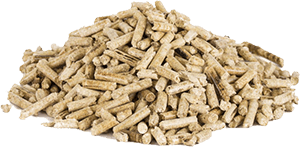
Agricultural wastes, which pose a problem for producers and factories in our country, are material resources that can be used in biomass energy. The remnants of agricultural products are substantial and cannot be collected or evaluated regularly. Approximately 60 million tons of waste is generated in our country every year. These wastes are either used as stubble in our country or disposed of by being thrown into landfills. The main restriction of their assessment is the high transportation and storage costs due to their low bulk density and irregular shape. It may be possible to overcome this limiting factor by compressing agricultural residues and converting them to high density.
Biomass energy, which had a large share in the energy consumption of less developed countries until recently and was generally obtained as a result of direct combustion, is an environmentally friendly, strategic energy source that is produced using modern technology, has a place in the energy portfolio of developed countries and is tried to be expanded with serious policies.
Hemp is a world wide known fiber and oil producing plant. The fiber and seed of the hemp plant are used for a wide variety of purposes. After the fiber is removed, the remaining stems can be used as firewood. It is an important fuel source especially for regions with fuel problems. Increasing hemp cultivation areas in provinces where production is permitted will mean an increase in the amount of stems as well as seed and fiber production, and an extremely high quality biomass resource will be gained.
Hemp can be considered as an important biomass plant. In the studies conducted by the Black Sea Agricultural Research Institute, it was determined that the Narlısaray hemp population has a biomass yield of approximately 1 ton / da. In the study conducted to determine the calorific value of hemp, it was determined that it has an average calorific value of 4,400 calories (cal / g). Calorific values of hemp and some different energy sources are given in the table below.
As can be understood from the examination of the table, the calorific value of hemp stems is quite high among agricultural materials. Another important point is that the calorific values of domestic brown coals in our country have a calorific value below 3,000 calories, whereas hemp stems have a calorific value 1.5 times higher than domestic brown coal.
Table 4. Utilization of Some Agricultural Residues as a Renewable Energy Source
| Materiel | Thermal Value (kkal) | Materiel | Thermal Value (kkal) |
|---|---|---|---|
| Domestic Lignite | <3.000 | Hazelnut Zurufu | 4.226 |
| Wood | 2.500 | Tea Garbage (Powder) | 4.758 |
| Fuel Oil | 9.700 | Corn Stalk | 4.275 |
| Diesel | 10.200 | Rapeseed Stalk | 4.087 |
| Paddy Stalk | 3.629 | Sunflower Stalk | 4.040 |
| Cotton stalk | 4.260 | Peach Pruning Waste | 4.369 |
| Safflower Stalk | 4.283 | Vineyard Pruning Waste | 4.356 |
| Hemp Stalk | 4.400 | Tomato Stems | 3.586 |

In addition to its high calorific value, it was determined that the ash content was extremely low, around 1% in the analyzes carried by KTAE. These data demonstrate that henp stems are an extremely high quality source of biomass. Flue-gas emissions generated during the combustion of hemp pellets were also determined. When the table in which flue-gas emission values are given is examined, it is seen that especially SO2 value is zero. It is known that sulfur-related air pollution is extremely important and can even lead to acid rain. The fact that as a result of the combustion of pellets from hemp stems, SO2 is not released into the atmosphere is an extremely important advantage for the environment.
Table 5.Flue Gas Emission Values of Some Pellets
| Materiel | CO (ppm) | NO (ppm) | NOx (ppm) | O2 (%) | CO2 (%) | SO2 (ppm) |
|---|---|---|---|---|---|---|
| Hazelnut husk | 2781,0 | 111,3 | 117,6 | 16,1 | 4,8 | 0 |
| Paddy husk | 643,0 | 99,3 | 105,0 | 16,7 | 4,4 | 0 |
| Hemp stalk | 150,3 | 104,0 | 109,0 | 14,2 | 6,5 | 0 |
Hemp as Other Biofuel Raw Material
Apart from biodiesel and biomass, it is possible to obtain biofuels from hemp. Studies on this subject generally focus on bioethanol and biogas.

Kuglarz et al. (2014) examined the potential of industrial hemp as a raw material for bioethanol production. In addition, the effect of pre-treatment conditions and cultivation style (traditional and organic) on hydrolysis and ethanol yield was also examined. In the study, hemp dried in the open-air was treated with dilute acid and steam. The highest glucose yield (73% -74%) and ethanol yield (75% -79%) were obtained in hemp samples pre-treated with 1% sulfuric acid solution at 180 oC. Whether the hemp is traditional or organic did not have a significant effect on pre-treatment efficiency, enzymatic hydrolysis and fermentation. When hemp processes are considered; Storing in the ethanol facility from the field and pre-treatment of hemp that is dried in the field under optimal conditions show positive economic results. Utilisation the side-products generated after ethanol production can increase profit. In this study, side-products formed after ethanol production contain lignin between 14.5% and 20.5%. It is concluded that lignin residues can be used for heat or energy production.

Industrial hemp shows exceptional potential for cellulosic ethanol production, especially in terms of yield per hectare, cost and environmental impact (Buck and Senn, 2016). In addition, the ability to obtain by-products such as high-value food grade oil besides the energy production process increases the value of this facility. In this study, the hemp stem was pre-treated with steam blasting at 155 ° C for 45 minutes and then hydrolyzed with the cellulase / xylanase mixture. After the treatment, degradation occurred up to 0.79 gg - 1 cellulose, followed by simultaneous sacrification and fermentation resulting in> 0.90 g g-1 cellulose fermentation. Hemp stem is a very suitable plant for cellulosic ethanol production since it contains 0.63 g.g 1 cellulose and only 0.142 g.g − 1 hemicellulose.
The potential of industrial hemp as a biofuel raw material with kenaf, millet and sorghum biomass has been evaluated agronomically, experimentally and economically (Das et al., 2017). While the total sugar amounts of all four raw materials were similar, it was found that the lignin ratio of hemp was higher than the other three raw materials. When their calorific values were compared, it was found that hemp and kenaf have slightly higher calorific values. As a result of another step, it has been determined that with the help of pre-treatment and enzymatic hydrolysis the sugar yield obtained from industrial hemp is at a similar level, if not higher, to other raw materials. Another factor in determining the potential of hemp as a biofuel is its ethanol yield. When the theoretical and predicted ethanol yield (82 gallons / dry tonne hemp) of industrial hemp is taken into consideration, it is concluded that its bioethanol potential is similar to other biomass. Comparative economic analysis has shown that the gross profit per hectare will be higher than other plants when bioethanol obtained from both grains and stems of industrial hemp is taken into account together. Prade et al. (2011) examined the energy efficiency of hemp (Cannabis sativa L.) planted for energy in Northern Europe under cold climatic conditions. 
Kreuger et al. (2011) examined the energy efficiency per unit hectare of net methane gas that can be produced by anaerobic digestion of industrial hemp. In the study carried out in Southern Sweden, the biomass yields of hemp harvested at four different times between July and November and the obtained methane values were compared with the values of other plants used for renewable energy. In the study, the highest net energy efficiency of methane obtained from hemp per hectare is 136 GJ and this value is higher than ethanol (wheat) and biodiesel (rapeseed) used as reference. It was stated at the end of the study that the obtained methane yield was not significantly related to the harvest time.