Hemp
TEAM: Urtiales
FAMILY: Cannabinaceae
GENERAL: Cannabis
TYPE: Cannabis sativa L.
CHROMOSOME NUMBER: 2N=20
Hemp systematically has the following varieties;
˙ Cannabis sativa var. vulgaris L. (cultivated hemp)
˙ Cannabis sativa ssp. indica Lam. (Indian hemp)
˙ Cannabis sativa ssp. gigantica (Giant hemp)
˙ Cannabis sativa ssp. ruderalis (Wild hemp)
Although not fully compatible with taxonomists, hemp is the only species of the genus Cannabis in the family Cannabinaceae.
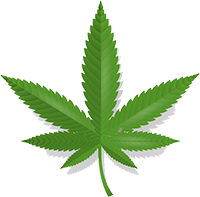
Cultured cannabis plant has a diploid structure and 20 chromosomes.
Cultured cannabis plant has a diploid structure and 20 chromosomes. Cannabis sativa L. ssp. vulgaris which has many subspecies was used for fiber production in the past. The subspecies Cannabis sativa L. indica, on the other hand, was mostly used for narcotic purposes as it contains THC. Wild cannabis that grows by itself in nature is Cannabis sativa L. ruderalis. However, all these subspecies, which are taxonomically classified in this way, can easily be interbred and give fertile offspring. These subspecies, which are easily separated from one other physically, chemically and genetically, now have intermediate forms that are crosbred with each other. Therefore, it has become almost impossible to determine exactly which subspecies the existing genotypes belong to. For example, although there are many sources that show the use of the indica subspecies in the production of illicit substances, today it is supposed that the most THC-containing species belong only to the indica (indian hemp) subspecies. This claim appears to be a false assumption. Because the genes of the Skunk species (type) consist of 75% sativa, 25% indica genetics. Also, in some countries genotypes with very high THC are commonly referred to as "Skunk". This statement is also false. Because "Skunk" is a hybrid species obtained for a special purpose. Therefore, what is essential in hemp is not the name of the subspecies, but for what purposes it was created and used.

History of Hemp
Hemp (Cannabis sativa L.) is one of the first cultivated plants in human history from C3 species, with 2n = 20 chromosomes, annual, long and strong and grown for seeds and fibers. As a result of archaeological research, remains of fabric made of hemp dated back to 8000 BC were found. It is known that hemp was produced in Anatolia in the 1500s BC. Hemp fibers had a very important place in textile production throughout history and shaped the economies of the country so much so that until the end of the 19th century, hemp fiber was the raw material of 80% of all textile products all over the world. When cotton fiber started to be used with the technology developed early 20th century, thinner yarns have been produced and lighter clothes have been made possible. With the anti-cannabis laws enacted in the 1930s, hemp agriculture was greatly interrupted, and in addition to this, hemp textiles began to lose their former importance with synthetic fibers developed in parallel with the war industry.
Hemp Production in Turkey:
In our country, hemp in 1961; 10,700 tons of fiber and 5,000 tons of seed fiber were produced in 20,800 hectares. However, high labor force, lack of mechanization, cheaper synthetic fiber , inability to compete with cotton plants caused hemp to lose the market value in our country as well as in the whole world. Also, it is a plant that should be planted in control due to the presence of THC in its natural structure. Producers avoiding control and tracking, did not prefer hemp agriculture and turned to different alternative products.

Although the hemp agriculture and fiber sector in our country dates back to very old times, its agriculture has decreased and has come to the point of cessation. Kastamonu is a city famous for its hemp cultivation. Unfortunately, hemp cultivation was not carried out in Kastamonu between 2009-2018. The rich source of genotypes held by the farmer has been lost.
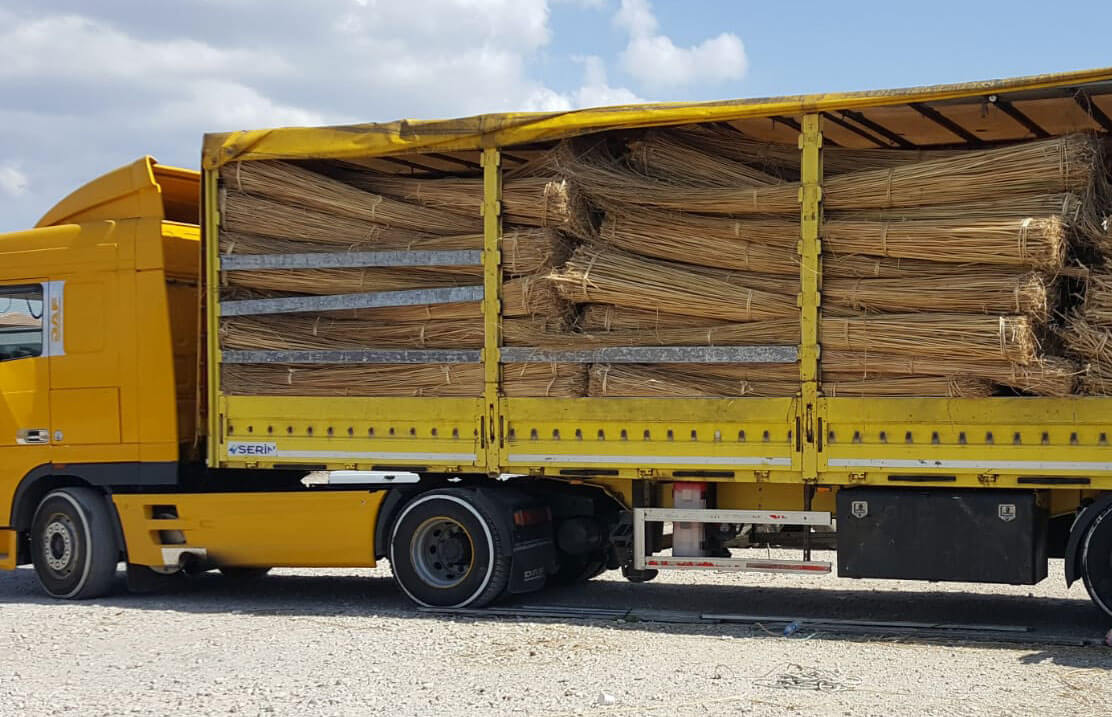
Our hemp seed production, which was 1200 tons in 1988, decreased to 1 ton in 2015. In 2017, the sowing area was only 10 hectares for fiber and 2 hectares for seeds; production took place in a total of 12 hectares. This sowing area is located in Samsun Province, Vezirköprü District, Narlısaray Town. The hemp produced in this town is especially for fiber purposes. The producers usually use the seeds tehy obtain in the following year, and use the hemp stems as fuel.
Morphology of Hemp
Root
Hemp has a taproot. It consists of a main taproot and secondary and lateral roots emerging from it. The taproots can go down to depths of 3 - 4 m under suitable moisture and soil conditions. The root system has spread in the form of a net starting from 15-20 cm soil depth. Its strong roots go deep into the soil. However, if the soil conditions are unfavorable, the main root remains short and the lateral roots develop more.
Stem
Hemp stems have a hard, herbaceous structure and the white wood part is surrounded by a green shell. Depending on the environment and the species, its diameter can vary between 4-20 mm and its length between 1-6 m. The length is higher in males than females. Hemp stems, which are juicy in the first development period, become woody as they age. The cross section of the stem is round in the hypocotyl part, four-cornered on top, and six-cornered above. In fact, each of the 4 corners creates three protrusions, resulting in a 12-cornered shape on the upper parts of the stem and a corrugated appearance of the plant stem as a whole. The stem, which is full of wood at the bottom, becomes full of sap as it goes upwards and finally becomes empty in the middle.
The hemp stem consists of nodes and internodes, the number of which is 9-11. Since the number of nodes is not much variable, the internodes are also long in tall hemp. In this plant, the internodes are the longest in the middle of the stem; it gets shorter towards the top and bottom. The length of the internode is important in determining the fiber length. The length of internodes varies between 3-40 cm. In hemp, the technical stem length refers to the length from cotyledon to the point where branching begins or in which the leave arrangement changes from opposite to alternate. This length varies according to the species and growing conditions.
Fiber
Hemp singular fibers are found in beams in the shell part of the stem. In the hypocotyl part of the stem, the number of fiber cells is low. The number of primary fiber cells increases from 4th node up to the 7th-8th node. As one moves up from these nodes, the number of cells and beams decreases. Between the 6th and the 9th nodes of the stem, the number of primary fiber cells is 8000-10000, and the number of fiber beams is 600-700. The number of fiber cells in the base of the stem is approximately 3000 and 4000-5000 at the tip. Hemp fiber cells are polygonal (2-7 cornered). The length of these cells is 5-100 mm, average 40-55 mm, and thickness is between 18-50 microns. Fiber cells become thinner towards the tip.
In females, the stem is thicker and the fiber yield is higher; In male hemp, the stem is thinner, the fiber yield is low, but the fiber quality is higher. Fibers occur in 3 stages within the shell. First formed fibers are more preferable as they are longer. The spindle-shaped fiber cells come together and adhere with pectin to form fiber beams. Hemp fibers contain more lignin than flax fibers, and no matter how often they are planted, they are not as thin as flax fibers. The fiber ratio of hemp stems is 16-20%; 65% of the fiber product is from female hemp fibers.
Leaf
Hemp leaves are opposite in the technical stem length; above it, they take place alternately. While the leaves show continuity intensively in the outmost inflorescences in female plants; In male plants, the flowers at the tip have sparse leaves. Hemp leaves are formed by the combination of 3-11 narrow leaflets at the tip and at the same point, on one stem, with their lengths shortening to both sides, with the longest in the middle.
Leaflets are narrow and long and their edges are roughly toothed. The number of leaflets in the middle of the stem is between 9 and 11; as one moves down and up, it decreases up to 3. Even simple leaves can be found at the tip. The length of the leaflets varies between 5-12 cm and width 1-2 cm.
Flower
Hemp is a dioecious plant. That is yo say that male and female flowers are found in separate plants. However, monoic forms are also encountered. In male plants, sparse inflorescences consisting of yellowish-green male flowers; In female plants, dense flower clusters compose of green-looking female flowers are located in the leaf seats. The flowers on the male plant are joined to the panicle shoot with short stems. Male hemp plants end in a rich inflorescence. In male flowers, 3 protective (bractea) leaves on the outermost, inside them 5 perianth remnants and inside them 5 stamens with their thin filaments, white round anthers take place. Stamens hang out of flower through perianth leaves.
The anthers are also covered with microsporangia. Pollens in white or yellow color are easily carried by the wind. The female flowers are located on female plants in pairs oppositely, in a dense, spica-like fashion, sessile on the axis of the flower position. In each pair, often only one flower gives fruit; the other is barren. The female hemp ends in a dense and rich spika-like flower cluster with lots of leaves. In female flowers, the protective (bractea) leaves are united and clearly surround the flower over the periantg. Perianth leaves combined to form a cup-shaped, continuous sheath around the ovary. The female organ, which has a single chambered ovary and forms a single seed inside it, has two large stigmas extending upwards through the protective (bractea) leaves. Stigmas have a hairy structure suitable for open fertilization.
Fruit Seed
It is also known as "cedene" in Anatolia. Although it is generally used as birdseed in our country, it has become more preferred in the kitchen in recent years with the discovery of its benefits for health. Hemp seeds are achenes that are egg-shaped, hard and brownish-greenish in color. The seed in the achene is endospermic and the embryo is curled in the fruit. Since it contains a single seed and its shell is hard and unopenable, achene is used as a seed source in the cultivation of hemp and is practically called hemp seed. Depending on the specie, the weight of the 1000 hemp seeds with the length of 4.0-6.0 mm; and width of 3.0-3.5 mm varies between 9-27 g in our country. Hemp seeds contain 30-32% fat, 22-23% protein, 1.5-2% sugar, 5-6% ash and 21% carbohydrate.